
Project planning and scheduling starts with a programme built from your contract, not a Gantt chart drawn to look busy.
We set up the activity structure, link the logic, apply realistic durations and calendars, then identify and review the critical path with you before the baseline is issued for approval.
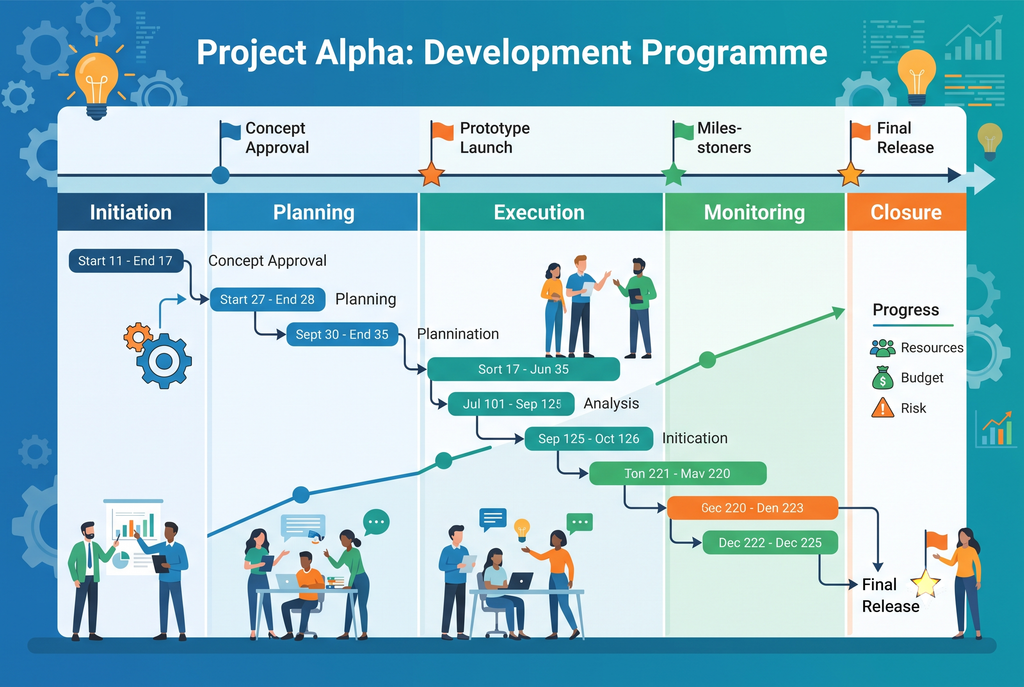
What we need from you to start: scope of work, contract dates, drawings or BOQ, and any client-imposed milestones.
A good project programme starts with the contract, scope and execution strategy. We develop the work breakdown structure (WBS), activity list, logic, calendars, realistic durations and key milestones so that the programme reflects how the project will actually be delivered.
Before the baseline is issued, we review the programme for logic, sequencing, critical path, constraints and overall constructability. The aim is to give the project team and client a programme that can be used for planning and progress measurement, rather than a document created only for submission.
Our project planning and scheduling work can support new project mobilisation, client programme submissions and independent review of contractor programmes. Where Primavera P6 is required, the programme can be developed and delivered in a native P6 format with the supporting outputs your project team needs.
Arizona for Projects is the online platform of Arizona Projects & Consultants, providing practical project planning and scheduling support for contractors, consultants and project teams.
How we approach project planning and scheduling
Effective project planning and scheduling starts with understanding how the work will actually be executed. We review the scope, contract requirements, available resources, key milestones and planned sequence before developing the programme. This helps ensure that the schedule is practical for the project team and useful for monitoring progress during execution.
For contractors and consultants, a well-structured programme can provide a clear basis for coordinating activities, tracking important dates and communicating planned progress to clients. Our project planning and scheduling approach focuses on creating a logical programme that can be updated and maintained rather than a schedule prepared only for initial submission.
Where required, we can also review an existing contractor programme and identify issues in activity logic, sequencing, durations, constraints and critical path. This can help project teams understand whether the planned dates remain achievable and where additional planning attention may be required.
Our aim is simple: to provide a project programme that reflects the contract and the actual execution strategy, while remaining practical enough for the team to use throughout the project.
For official Primavera P6 product information and documentation, see Oracle’s Primavera P6 Professional documentation.
What a project programme should achieve
A project programme should do more than show dates on a Gantt chart. It should provide a clear sequence of work, identify key interfaces and milestones, and give the project team a practical basis for measuring progress. A well-developed programme also makes it easier to understand the effect of changes to planned activities and completion dates.
During project execution, the programme can be updated with actual progress and revised forecasts. This allows the team to see where activities are ahead or behind plan and which parts of the remaining work require attention. Where a project has experienced delays or changes, the programme can also provide an organised record of planned and actual dates for further review.
We focus on keeping project planning and scheduling practical, transparent and aligned with the way the project is being delivered.
A well-structured project programme also provides a practical reference during execution. It helps the project team understand upcoming activities, monitor key dates and identify potential slippage before it affects important milestones. We can also review an existing programme and refine it where the original planning needs greater clarity or coordination.